
Lower income groups earning less than Rs 100,000 a year are yet to recover as are those earning between Rs 100,000 and Rs 200,000.

With the first quarter earnings season coming to an end, the domestic equity markets would be driven by global trends and trading activity of foreign investors this week, analysts said. The movement of global oil benchmark Brent crude and the rupee against the dollar would also drive trends in the market. "Macroeconomic indicators, trends in global stock markets and FII activities will be pivotal in shaping market trends in the coming days," Pravesh Gour, senior technical analyst at Swastika Investmart Ltd, said.

Indian stock markets are expected to be driven mostly by global factors this week amid a lack of local triggers and earnings season largely coming to an end, say analysts. Crude oil prices, rupee movement and US Federal Reserve meeting minutes to be released this week will also influence the market sentiment. "With the earnings season behind us, global cues would largely dictate the trend in the coming week," Ajit Mishra, SVP - technical research, Religare Broking Ltd, said.

Among the Sensex firms, JSW Steel, Tata Steel, Tech Mahindra, Infosys, Wipro, Tata Consultancy Services, Nestle, HCL Technologies, HDFC Bank and Maruti were the major laggards. IndusInd Bank, ITC, Bharti Airtel and State Bank of India were among the winners.

Since their highs in September, chemical stocks have underperformed the benchmarks and broader indices over the past month with larger players witnessing a 9-22 per cent fall during this period. Expectations of weak September quarter results amid high inventory, demand woes and weak realisations have led to the underperformance.

On the Sensex chart, Bharti Airtel was the biggest loser with nearly 3 per cent drop in its share price. It was followed by IndusInd Bank, Maruti Suzuki, HeroMoto Corp and Tata Steel.

Investment growth moderated slightly in the economy during the first quarter (Q1) of the current financial year (2023-24, or FY24), notwithstanding the front-loading of capital expenditure (capex) by the Centre. This was also the case despite a pick-up in demand during the period after two dismal consecutive quarters. Although growth in gross fixed capital formation (GFCF), representing investment, fell to a five-quarter low of 7.96 per cent, the comparison with the first two quarters of the previous year is a bit askew due to the low year-on-year (Y-o-Y) base of those periods.
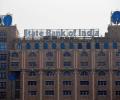
SBI Q3FY24 result review: A higher-than-factored weakness in the October-to-December quarter (Q3) results of State Bank of India (SBI), for financial year 2023-24 (FY24), has prompted brokerages to cut earnings estimates for the ongoing financial year. They, however, have maintained 'Buy' ratings on the stock, revising target price upwards in some cases, owing to the stock's recent underperformance relative to its peers.

India, along with Southeast Asian countries such as Indonesia, is expected to sustain growth in the medium-term in Asia region, replacing China as the key growth driver, Morgan Stanley and Nomura said in two separate reports released on Monday. While Morgan Stanley projected a 6.2 per cent gross domestic product (GDP) growth forecast for India in FY24, Nomura estimated the Indian economy to grow at 5.9 per cent in 2023. "Even with a slowing China, we expect GDP growth in Asia to sustainably outperform other emerging markets and the US. India and Southeast Asia are set to be the fastest-growing economies this decade.

Loan against gold as a product is catching on fast. Let's keep the momentum going, but aim for sustainable growth. A few bad apples should not ruin the brunch, argues Tamal Bandyopadhyay.

Most of the Indian corporates are hopeful that the economy would revive by 2010 and are lining up fresh investments either for this year or the next, a survey by global financial consultancy firm KPMG has said.

Economic Survey says Indian carriers operate in an exceptionally high-cost environment.

The civil aviation industry, which was hit hard by the global financial meltdown and high fuel cost, saw a strong recovery in 2010 with the domestic passenger traffic rising 19 per cent to 51.53 million, the Economic Survey said on Friday.

'Like every Budget, this time, too, there is chatter around tinkering with the long-term capital gains tax.' 'Investors may not want to jump into the markets until there is clarity on this front.'

L&T, ITC, Infosys and RIL among the top gainers.

'Dharti par jo Rab hota hai, woh hai pitaah (There's a God on earth, and it's a Father).'
GDP growth of 7.7 per cent in the first half of this fiscal has "left sceptics gasping and woefully behind the curve", an RBI article said on Wednesday. It also stressed the buildup in the growth momentum is likely to be sustained. The article on the state of the economy published in the Reserve Bank's December Bulletin on Wednesday also said CPI-based retail inflation is expected to ease to 4.6 per cent in the first three quarters of 2024-25 from 5.6 per cent in November.

Little indication of growth surge in either industry or services till well into FY14.

Titan Company on November 21, became the second Tata group firm to join Rs 3 trillion market capitalisation (market cap) club after its shares hit a new high of Rs 3,400, up nearly 2 per cent on the BSE in Tuesday's intra-day trade. At 12:28 PM; with a market cap of Rs 301,847 crore (Rs 3.02 trillion) Titan stood at number 16th position in overall market cap ranking on the BSE listed companies, the exchange data shows. Titan overtook paint company Asian Paints, which has a market cap of Rs 300,579 crore, data shows.

Debashis Chatterjee speaks about the overall demand environment and company's strategy

A husband has no control over his wife's 'stridhan' (woman's property) and while he may use it during the time of his distress, he has a moral obligation to return it to his wife, the Supreme Court has reiterated while directing a man to pay Rs 25 lakh to a woman in return for her lost gold.

Riding on a bull run, equity investors became richer by Rs 128.77 lakh crore in the 2023-24 fiscal, driven by robust fundamentals of the Indian economy, increased investment inflows and promising corporate earnings. After a muted performance in 2022-23, equity markets made a remarkable recovery in FY24, giving handsome returns to investors. The 30-share BSE Sensex climbed 14,659.83 points or 24.85 per cent in 2023-24.

Bajaj Finance was the top laggard in the Sensex pack, dropping over 9 per cent, followed by Axis Bank, IndusInd Bank, HDFC, ICICI Bank and M&M. Reliance Industries, however, capped the losses by rallying over 3 per cent. Sun Pharma, Hero MotoCorp, L&T, PowerGrid and Bajaj Auto were also among the gainers.
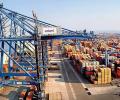
DFC is the US government's development finance institution. Adani Ports and Special Economic Zone Limited (APSEZ) in a statement said that the US fund will support the development of deepwater shipping container terminal in the Port of Colombo.

Prime Minister Narendra Modi on Saturday announced the adoption of the New Delhi Leaders Declaration, a significant victory for India's G20 presidency that came amid increasing tensions and divergent views over the Ukraine conflict.
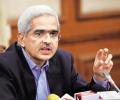
Softening inflation, Das said would make available more policy space to the central bank to address risks to the growth going forward.

The private sector's new project announcements in the quarter ending March were among the highest on record. The value of new private sector project announcements for the three months ending March 2024 was Rs 9.8 trillion, shows data from tracker Centre for Monitoring Indian Economy (CMIE). This is the second-highest on record in data going back to 2009.

The April-June quarter GDP slipped to 7 per cent from 7.5 per cent.

Among the Sensex firms, Nestle rose the most by 4.66 per cent. NTPC rose by 2.16 per cent, Reliance Industries by 1.53 per cent, State Bank of India by 1.04 per cent and Hindustan Unilever by 1.03 per cent. ITC, Power Grid and Bajaj Finance were the major gainers. Wipro, Tata Consultancy Services, HCL Technologies, Tata Steel, Bajaj Finserv and Maruti were among the laggards.

The crisis-hit NSEL is promoted by Jignesh Shah-led Financial Technologies (India) Ltd.


The stock of consumer goods major Emami has corrected nearly 3.5 per cent since its 52-week high of Rs 546.25. On August 29, the stock closed at Rs 521.90 on the BSE. After underperforming the Nifty FMCG index for a long time, the stock is now doing a catch up and surged over 13 per cent in the past one month.

Analyst are cautious about the performance of IT services sector from January to March quarter (Q4) of FY24 and the first half (H1) of FY25. While the Bloomberg consensus on revenue implies the market is expecting 2-3 per cent growth on a quarter-on-quarter (Q-o-Q) basis for the IT majors through FY25, the H1FY25 is likely to see even flatter returns, and Q4FY24 is likely to be poor. There is likely to be some recovery in the second half (H2FY25) but even so, there's a chance that the market will be overall disappointed.

'Indian equity valuations, although not very expensive, are not cheap either.'

Among the Sensex firms, Wipro, HCL Technologies, NTPC, Reliance Industries, Infosys, IndusInd Bank, Tech Mahindra and Tata Consultancy Services were the major laggards. IT stocks fell on profit-taking after rallying sharply in the past two sessions. Tata Steel, Titan, Maruti, Larsen & Toubro, ITC and JSW Steel were among the gainers.

Renewed inflationary pressures, led by a spike in prices of vegetables and cereals, have cast a spell on the equity markets in the past month. The BSE Sensex and Nifty50 have declined up to 2 per cent each during the period, clipping the 13 per cent rally from the March lows, shows data from ACE Equity. Investors typically consider shares of fast-moving consumer goods (FMCG) companies as defensive bets, putting their weight behind them in a falling market.

History would indicate that a recession is not that far off.

The margins of tyre manufacturers could come under pressure given the rise in rubber prices and the moderating demand for tyres. In the past three quarters, the revenue growth for listed tyre companies has moderated from low to mid-single-digit on account of factors such as lower demand in replacement segments, weak export markets and the decline in the average selling prices to car makers (OEMs). Demand trends could remain muted in the near term, given the weak passenger vehicle replacement demand, assuming a typical replacement cycle of 3-5 years, and demand moderation in the OEM segment.
It has Rs 20,500 crore of standard stressed pool outstanding as of June 2018. Thus, the entire stressed book (net NPAs and standard stressed pool) is nearly two times its net worth.

To help revive the economy battered by COVID-19, Finance Minister Nirmala Sitharaman on Monday announced a slew of measures, including Rs 1.1 lakh crore credit guarantee scheme for improving health infrastructure, and enhancing the limit under the ECLGS by 50 per cent to Rs 4.5 lakh crore for the MSME sector facing liquidity crunch. Sharing the details of stimulus package, the finance minister said this comprises eight relief measures and other eight measures to support the economic growth. She announced Rs 1.1 lakh crore loan guarantee scheme for COVID-affected sectors, including health sector, which includes guarantee cover for expansion or for new projects. Besides, she said, additional Rs 1.5 lakh crore limit enhancement done for Emergency Credit Line Guarantee Scheme (ECLGS) scheme.
